
Loading...
Serving Alameda, CA and surrounding areas. (341) 204-8895
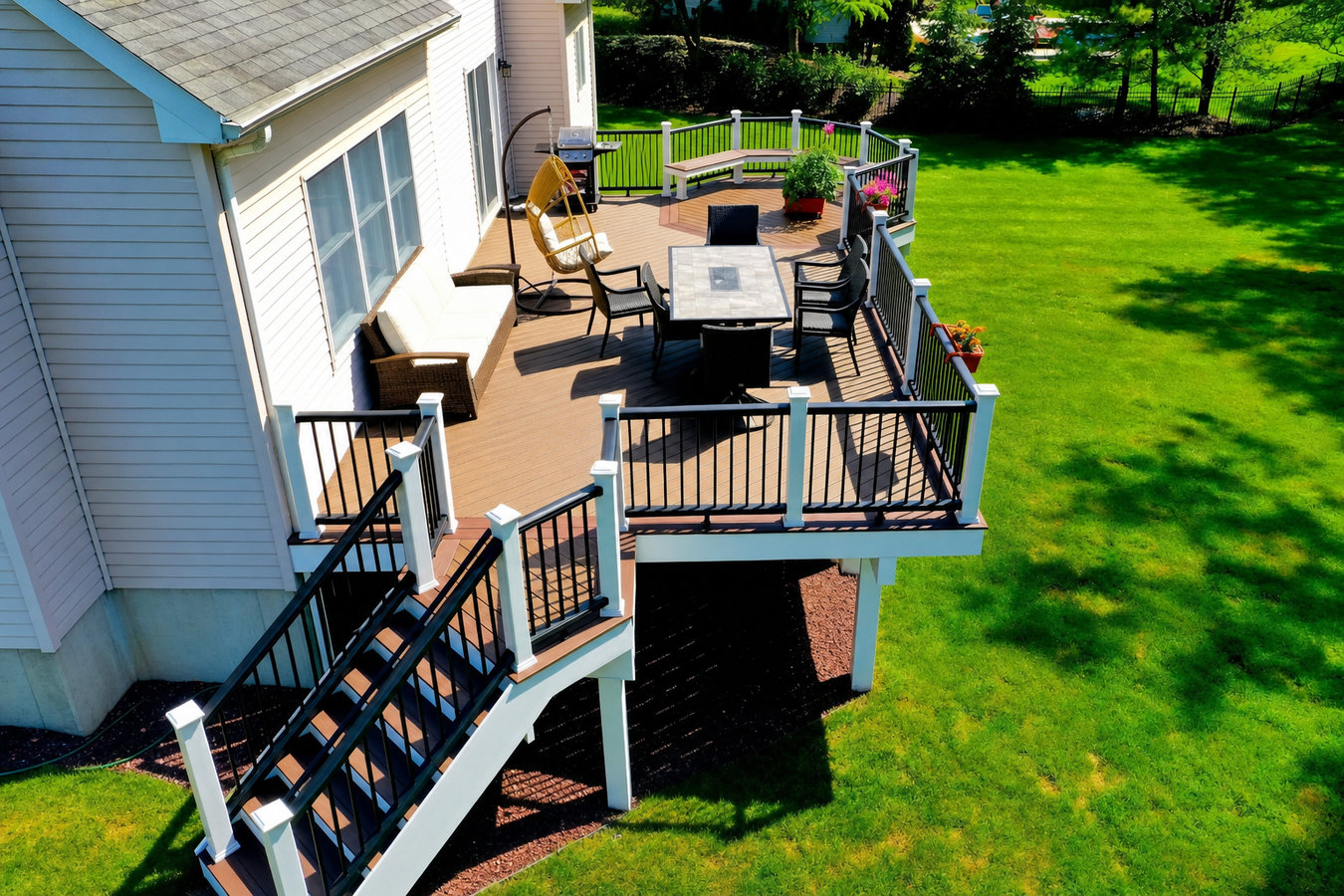
If your backyard drops away from your door or feels too cramped for one platform, a tiered deck creates separate spaces for dining, lounging, and yard access - built for Alameda's coastal conditions.
Multi-level decks in Alameda are outdoor living structures built on two or more connected platforms at different heights, linked by stairs or landings, with most two-level projects taking one to three weeks of construction after the permitting process is complete.
A lot of Alameda homeowners come to us because their yard slopes away sharply from the back door and a single flat deck would either waste the slope or require expensive grading. A tiered design works with the grade instead of fighting it - turning an awkward backyard into a series of usable outdoor rooms that flow naturally from the house down to the garden. Many lots closer to the bay or along the estuary have exactly this kind of terrain. For homeowners who want to add a cooking setup to their multi-level project, pairing the build with deck railing installation or integrating a full custom deck design and build approach means every element - structure, railings, and finish - is engineered as one system from the start.
Permitting adds real time to the process in Alameda. The city requires permits for any deck attached to the home or elevated more than 30 inches above grade, and the review can take two to six weeks. We handle the entire permit submission and inspection schedule so you do not need to navigate city hall on your own.
If your backyard drops off sharply from your back door, you may have a narrow strip of usable flat space and a slope that is hard to furnish or enjoy. A multi-level deck solves this by creating flat, stable platforms at different heights that follow the grade of your yard. Many Alameda lots - especially those closer to the bay - have this kind of uneven terrain, and a tiered deck is often the most practical solution.
If you find yourself shuffling chairs around to fit a table and a grill on the same platform, you have outgrown a single-level design. A second level gives you room to separate cooking from dining or to create a quieter seating area away from the main activity. This is one of the most common reasons Alameda homeowners upgrade from a basic deck to a multi-level design.
Alameda's salt air and year-round moisture are hard on older decks, and the signs of wear are usually visible before the structure becomes unsafe. Rust streaking down from screws, boards that feel soft when you press on them, and railings that move when you lean on them are all signs your current deck has reached the end of its useful life. At that point, replacing it with a new multi-level design is often more cost-effective than patching an aging structure.
Some Alameda homes - particularly older Craftsman and Victorian-era houses - have back doors that open several feet above grade, with nothing but a few makeshift steps leading down. A multi-level deck turns that awkward transition into a safe, attractive entry point with proper stairs and landings. It also adds real value to the home by making the back of the house feel finished.
We build multi-level decks ranging from a simple two-platform layout with a single stair run to complex designs with multiple landings, built-in seating, pergola covers, and outdoor kitchen stations. Every project starts with how you want to use the space - which platform should be closest to the kitchen, where you want shade, how guests will move between levels, and how the lowest level connects to the yard. Getting that layout right before choosing materials is what separates a deck that works from one that feels like an afterthought.
For homeowners who want to add railings, shade, or a covered area, we incorporate deck railing installation and covered structures into the same project so everything is designed to code and inspected together. Homeowners who want a fully custom design from the ground up - with specific material selections, structural engineering, and design review support for older Alameda homes - benefit most from starting with a custom deck design and build engagement, where the entire structure is engineered to work together from the first post in the ground. Decking surface choices include composite, pressure-treated wood, and rot-resistant hardwoods. In Alameda's coastal climate, composite and hardwood options consistently outperform pressure-treated lumber over time because of the persistent salt air and moisture.
The most common starting point - one platform near the house for dining or grilling, a second lower level closer to the yard, connected by a simple stair run.
Tiered platforms with built-in benches, planters, or a pergola - suits homeowners who want a finished outdoor room, not just a deck surface to put furniture on.
Multiple levels that step down a sloped yard, turning an unusable grade into a series of flat, usable spaces - the right choice when grading the yard is not practical or cost-effective.
Alameda sits on an island in San Francisco Bay, and that location means your deck is exposed to salt-laden air year-round. Salt air accelerates rust on screws, brackets, and connectors, and it breaks down untreated or low-grade wood faster than it would in an inland city. Every multi-level deck we build in Alameda uses fasteners and hardware specifically rated for coastal conditions - not as an upgrade, but as the only specification that holds up over time here. Homeowners closer to the water, near Crown Memorial State Beach or along the estuary, see the effects of salt air more quickly than those further inland, which makes material selection even more important. We also check the connection point between the new deck and your home carefully - Alameda's large inventory of pre-1950 homes often has framing, siding, or ledger boards that require extra attention before a deck can be safely attached.
Alameda's permitting process is thorough, and navigating it successfully requires familiarity with the City of Alameda Community Development Department and the timing of plan review. Homes in historic neighborhoods - including parts of the Gold Coast area - may also require design review approval before a standard building permit is issued. We have experience with both processes and build that lead time into every project schedule so there are no surprises before the crew shows up. Homeowners in Alameda, CA and neighboring Oakland, CA benefit from working with a contractor who knows these local processes and the conditions that affect outdoor structures near the bay.
Reach out by phone or through the contact form. We reply within 1 business day. A quick conversation about your yard, your goals, and your rough budget lets us show up to the site visit prepared - not starting from scratch.
We visit your property to measure the space, assess the slope, and check how the deck will attach to your home. After the visit, you receive a written proposal with a design, materials list, and all-in price - no hidden permit or cleanup fees.
Once you approve the design and sign the contract, we submit plans to the City of Alameda. Permit review typically takes two to six weeks. We track the status and keep you updated - you do not need to contact the city yourself.
With the permit in hand, the crew digs footings, frames each level, installs decking, and builds stairs and railings. A city inspector confirms the work meets the approved plans. You receive a final walkthrough and a copy of your permit records.
Free on-site visit, written estimate, and no obligation. Permit lead times in Alameda mean starting sooner gets you to your first summer on a new deck faster.
(341) 204-8895We use stainless steel and hot-dipped galvanized fasteners and connectors rated for salt-air environments on every deck we build in Alameda - not as an add-on, but as the standard specification. Standard steel fasteners rust quickly this close to San Francisco Bay, and the cost of using the right hardware upfront is far less than dealing with corroded connections a few years in.
Every deck we build in Alameda goes through the city's permit and inspection process. We submit the plans, track the review, and schedule each required inspection - including the City of Alameda Community Development Department's final sign-off. You receive a complete paper trail, which protects you at resale and confirms the structure was built to the approved plans.
Alameda's pre-war housing stock - Victorian-era homes and Craftsman bungalows built before 1950 - sometimes has framing or ledger boards that need reinforcement before a deck can be safely attached. We inspect the connection point during the estimate visit, so if there is structural work needed, you hear about it in the quote, not halfway through the build.
A sloped lot is not a problem to solve - it is a reason to build something more interesting than a flat platform. We design tiered decks that follow the natural grade, creating distinct zones for dining, lounging, and yard access without expensive grading or fill work. The North American Deck and Railing Association recognizes tiered design as the preferred approach for sloped residential sites.
Every project on this island faces the same conditions: salt air, damp winters, older homes, and a permitting process that rewards contractors who know it well. We have built multi-level decks across Alameda and understand what it takes to build something that holds up here.
Code-compliant railing systems in wood, composite, aluminum, or cable - installed on new multi-level decks or retrofitted to existing structures.
Learn MoreA fully designed deck project from the ground up, with structural planning, material selection, and permit coordination for Alameda's older housing stock.
Learn MorePermit lead times in Alameda mean the sooner you start, the sooner you are enjoying your new outdoor space - reach out today and we will get the process moving.