Loading...
Serving Alameda, CA and surrounding areas. (341) 204-8895
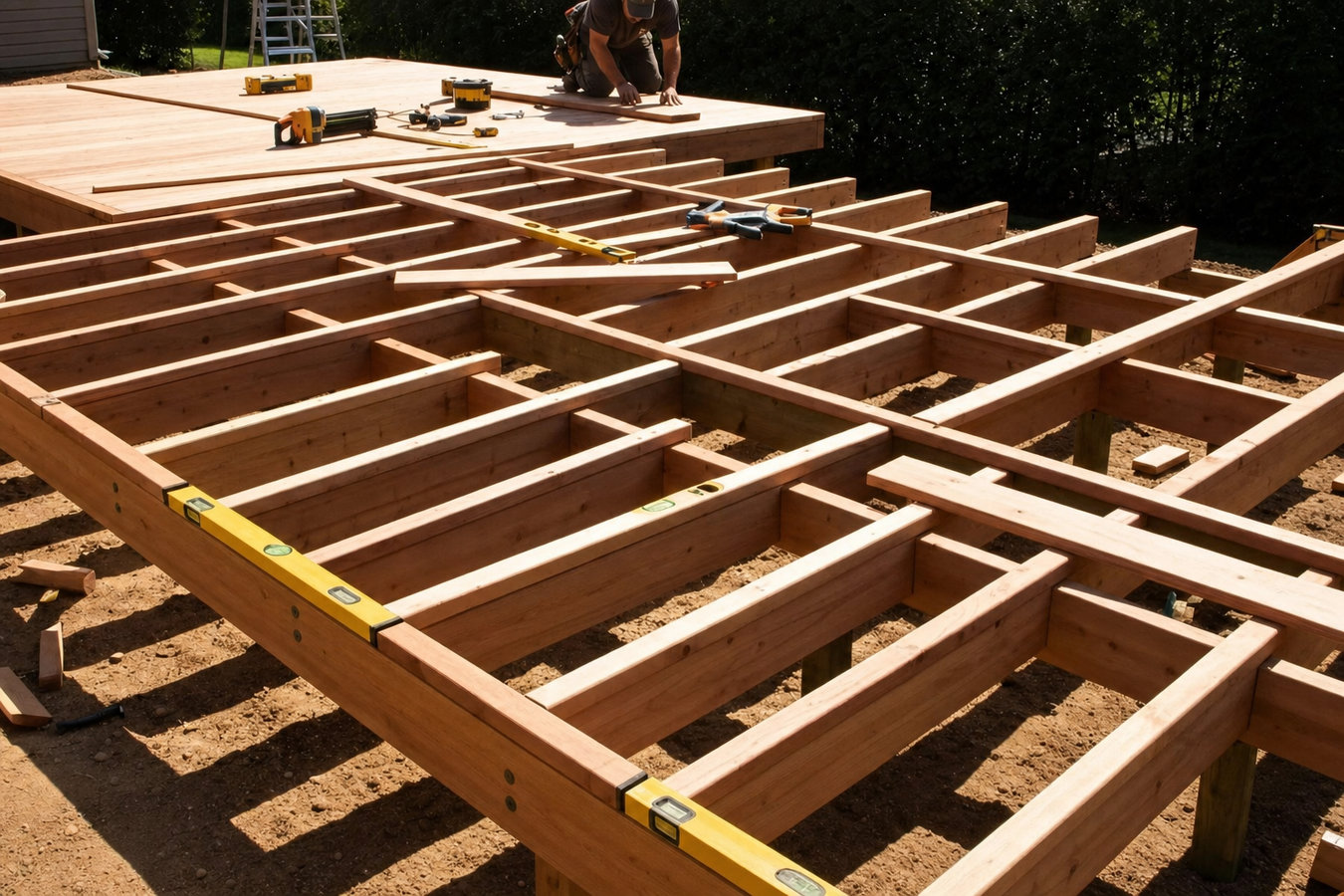
Master Alameda Fence & Deck is a deck builder serving San Lorenzo, CA, experienced in cedar deck construction, wood fencing, and outdoor structures on the postwar tract homes and slab-foundation lots that define San Lorenzo Village. We have served East Bay homeowners since 2019 and respond to estimate requests within one business day.
San Lorenzo homes were built fast in the late 1940s as postwar housing demand surged, and most backyards here are flat, open, and ready for a proper outdoor living space. Cedar is a natural fit for these properties - it complements the simple, clean lines of the Bohannon-era home exteriors and handles the East Bay wet-dry cycle without the rapid surface degradation that untreated pine shows. Learn more about how we approach material selection and build sequencing on our cedar wood deck construction service page.
For San Lorenzo homeowners who want a finished backyard deck without annual staining and sealing, composite decking is the low-maintenance alternative to wood. East Bay summers are long and dry, and wood decks that go unprotected through a single dry season gray and crack visibly. Composite holds its color, resists moisture, and carries manufacturer warranties that wood cannot match. It costs more upfront, but the ongoing maintenance savings are real - especially on homes where access to the deck requires moving furniture or scheduling a contractor.
San Lorenzo lots are modestly sized and close together - the same neighborhood density that characterizes much of the East Bay flatlands. A solid wood privacy fence is what separates a backyard that gets used from one that feels exposed. Cedar and redwood fences hold up well in this climate when posts are properly anchored and the base treatment is correct. On San Lorenzo's clay-heavy soils, post depth and concrete collar installation matter more than most homeowners realize.
Many decks on San Lorenzo properties were added after the original Bohannon construction - sometimes decades later - and those older builds often show their age in the form of post rot, deteriorated ledger connections, or boards that have cupped and split through years of wet-dry cycling. We assess the structural condition honestly before recommending a course of action. When a partial repair is genuinely the right answer, we say so. When the structure needs to come out and start fresh, we explain exactly why.
San Lorenzo's climate swings between five months of rain and five months of near-drought, and that cycle is rough on any untreated wood surface. A proper stain and seal applied on the right schedule - before the dry season, with the wood clean and dry - keeps boards from cracking, graying, and absorbing the moisture that drives rot. We prep surfaces thoroughly before applying any product because a sealer applied over dirty or grayed wood does not bond properly and fails early.
San Lorenzo gets real winter rain from November through March, and a covered deck or patio cover turns an outdoor space that goes unused in the wet season into one that works year-round. On the flat-roofed or low-slope postwar homes common throughout the neighborhood, a well-built patio cover can attach cleanly to the existing roofline without looking mismatched. We design covers to carry the structural loads that Alameda County building code requires for permitted additions.
Most homes in San Lorenzo were built between 1945 and 1960 as part of David Bohannon's large-scale postwar development of what became San Lorenzo Village. These are modest single-story homes on relatively flat lots, and after 70 to 80 years the original concrete flatwork, foundations, and any outdoor structures that came later are showing the effects of time and Bay Area clay soils. Clay soils are the single biggest factor that distinguishes deck and fence work in San Lorenzo from what you would encounter in the East Bay hills or in cities with sandier soil profiles. Alameda County flatland soils absorb moisture and expand in the wet season, then dry out and contract in summer. That seasonal cycling puts stress on concrete footings, post bases, and slab edges year after year - and it is the primary reason that standard footing depth and hardware specifications for drier climates are not sufficient here.
San Lorenzo is also an unincorporated community, which means permits do not go through a city building department - they go through Alameda County. That distinction matters practically because contractors who regularly work in nearby cities like San Leandro or Hayward but have not done permitted work in unincorporated Alameda County need to know that the application goes to the county, not the adjacent municipality. Getting that wrong at the start can cost weeks. The other local factor worth understanding is San Lorenzo Creek, which runs through the community before emptying into the bay. Properties near the creek corridor have historically faced drainage and flooding concerns during heavy rain years, and that affects how outdoor structures near or downhill of those zones should be designed.
Our crew works throughout San Lorenzo regularly, and we submit permits through Alameda County Planning and Building for all residential projects in unincorporated communities like San Lorenzo. Understanding that the permit office for these jobs is the county rather than a city building department is a basic operational detail that affects every project here - and getting the application into the right office with the right documentation saves the re-submittal delays that can add weeks to a project timeline.
San Lorenzo sits between San Leandro to the north and Hayward to the south along the west side of Alameda County, with Interstate 880 running close by on the western edge of the community. The neighborhood streets that make up San Lorenzo Village are laid out in a grid with consistent lot sizes - a product of the planned postwar development that built most of the area in a short window. The housing stock is remarkably uniform in age and construction type, which means the repair and maintenance needs we see on one block are generally the same needs we see four blocks over.
We also serve homeowners in neighboring Castro Valley, just to the east, where the terrain shifts from flat to gently hilly but the postwar housing character and clay soil conditions remain familiar. And for homeowners along the northern edge of San Lorenzo near the San Leandro border, we serve that area as well - more details on our work in San Leandro.
Call us or submit a request through the contact form. We respond to all San Lorenzo estimate inquiries within one business day and schedule a site visit at a time that is convenient for you - you do not need to be present, but we can answer more questions if you are.
We visit your San Lorenzo property, measure the space, check the condition of any existing structure, and discuss your material preferences and budget. The estimate we provide is detailed and itemized - no vague line items that shift later. There is no charge for the visit and no obligation to proceed.
Once you approve the estimate, we prepare and submit the permit application to Alameda County Planning and Building. County review for straightforward residential projects typically takes three to five weeks. We handle the back-and-forth with the plan checkers and update you as the application moves through.
We build to the approved plans, schedule the required county inspections, and do a walkthrough with you when the work is finished. We leave the site clean, and any punch list items get resolved before we close the project - not weeks later.
We serve homeowners throughout San Lorenzo, CA and the surrounding unincorporated East Bay. Free estimates, no pressure. Call or fill out the form and we will get back to you within one business day.
(341) 204-8895San Lorenzo is an unincorporated community of roughly 26,000 to 28,000 people in Alameda County, situated between San Leandro and Hayward along the west side of the county. The neighborhood was largely built by developer David Bohannon starting in 1944, when he developed San Lorenzo Village as a large-scale planned postwar community - one of the earliest and most extensive examples of that kind of development in the Bay Area. The result is a neighborhood where most homes date from the late 1940s and early 1950s, and the housing stock is consistent in age, style, and construction type throughout. Because it is unincorporated, San Lorenzo has no independent city government - residents deal with Alameda County for permits, code enforcement, and public services rather than a city hall. More background on the community is available from the San Lorenzo Wikipedia article.
San Lorenzo Creek runs through the community from the East Bay hills down to San Francisco Bay, and the Alameda County Flood Control District manages the creek channel and the flood risk it creates for properties along its corridor. The flat terrain and clay-heavy soils throughout the neighborhood make drainage a persistent topic for homeowners, particularly during heavy rain years. Homes are closely spaced on modest lots, with small backyards and concrete driveways that are now well into their seventh or eighth decade of use. We serve homeowners throughout this community, and we also work in nearby Hayward, where the postwar residential character and clay soil conditions are similar to what you find in San Lorenzo Village.
Get a deck built to your exact specifications and outdoor vision.
Learn MoreIndustry-leading Trex materials installed by certified professionals.
Learn MoreDurable pressure-treated lumber for an affordable, lasting deck.
Learn MoreProtect and refresh your deck with professional staining and sealing.
Learn MoreClassic wood privacy fences built to define and secure your yard.
Learn MoreEnjoy outdoor living without bugs with a screened enclosure.
Learn MoreStay comfortable outside year-round with a covered deck or patio.
Learn MoreWe know San Lorenzo's postwar housing stock, Alameda County permits, and the soil conditions that affect how outdoor structures are built here. Call or request a visit and we will come take a look.