
Loading...
Serving Alameda, CA and surrounding areas. (341) 204-8895
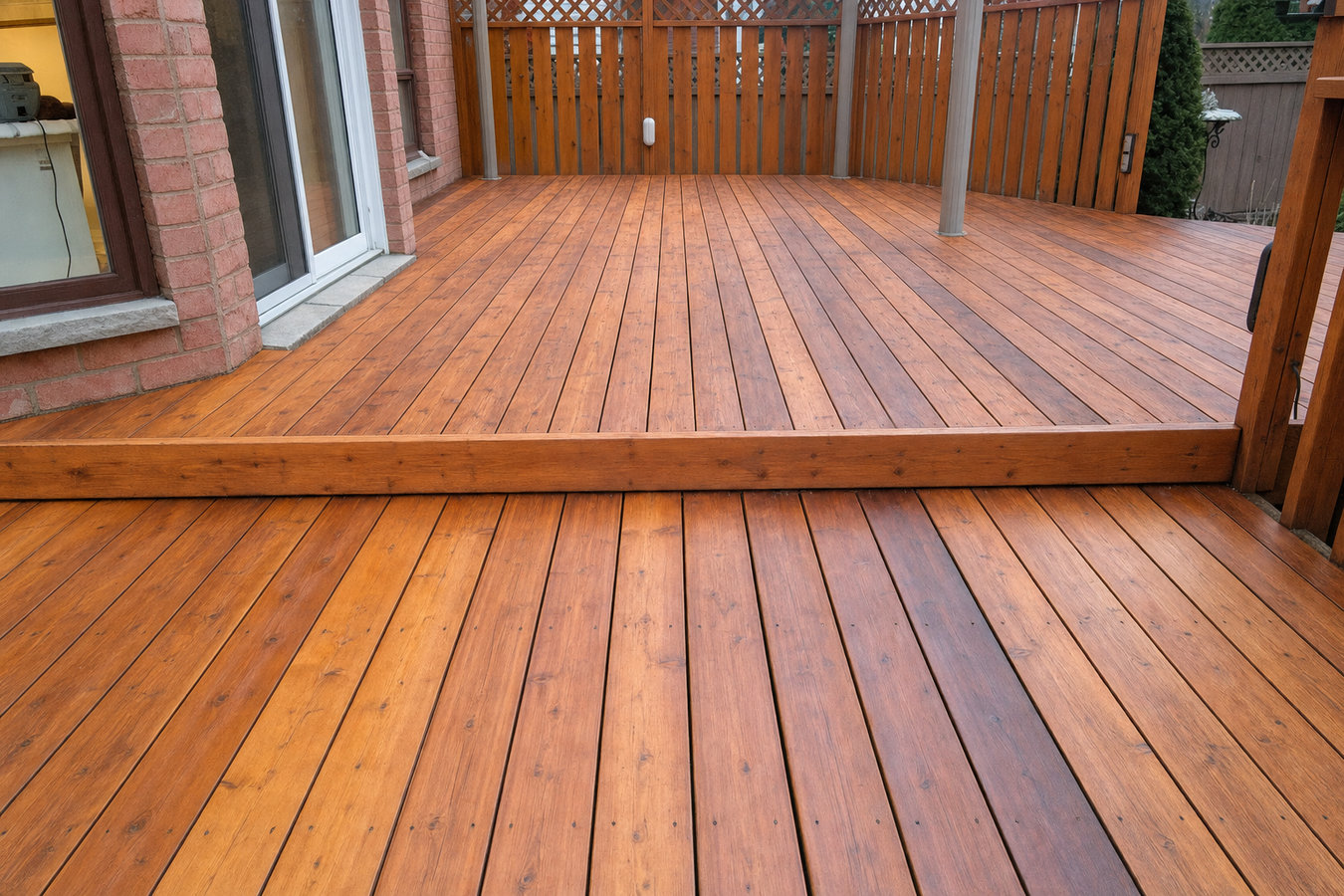
Master Alameda Fence & Deck is a deck builder serving Hayward, CA, specializing in deck staining and sealing, new deck construction, repairs, and fence installation for the postwar bungalows of the flatlands and the sloped lots of the Hayward Hills. We have served the East Bay since 2019 and respond to estimate requests within one business day.
Hayward decks take real punishment from the wet-dry cycle - soaking rains from November through March, then months of dry heat that cause wood to crack and check at joints and end grain. A fresh stain or sealer applied before the rainy season is the single most effective maintenance step you can take to extend the life of a wood deck here. Decks on Hayward Hills properties that get shade and moisture from the slope need more frequent attention than south-facing flatland decks. Our deck staining and sealing service includes surface prep, cleaning, and product selection matched to your deck type and sun exposure.
Hayward has a large inventory of decks that were added to 1950s and 1960s homes in the decades that followed - which puts many of them in the 30 to 50 year range now. At that age, posts at the soil line, joist ends, and ledger connections are the most likely failure points, and the clay soils under flatland Hayward properties add movement stress that accelerates deterioration at footings. We assess the full structure before recommending repair or replacement and do not push a rebuild when targeted repairs will solve the actual problem.
For Hayward Hills properties where decks are shaded, sit on north-facing slopes, or are difficult to access for annual maintenance, composite decking is the low-maintenance answer. It does not absorb the moisture that drives mold growth on shaded Hayward decks, does not need staining, and is not affected by the dry-season cracking and checking that unprotected wood develops during hot East Bay summers. If you want a Hayward Hills deck that looks the same in year ten as it did on installation day, composite delivers that outcome.
Hayward flatland neighborhoods have a high density of fence lines separating small lots, and the clay soils underneath cause more fence post lean than homeowners expect. Posts set without adequate depth and concrete anchoring in Hayward clay will shift within a few wet-dry cycles as the soil swells and contracts. We set all posts at the depth and with the concrete base that Hayward soil conditions require - not just to minimum code - so the fence stays plumb through the seasonal ground movement that is routine here.
Hayward Hills lots are steep enough that a single-level deck often means the structure is extremely elevated at the low end of the yard, requiring tall post runs that put significant load on the footings. A multi-level design steps with the terrain, reduces post heights at each level, and creates distinct usable areas at different grades rather than a single platform suspended in the air. We plan tiered layouts to match the actual slope of the lot so the deck feels like part of the property rather than something installed on top of it.
Pressure-treated lumber is the practical starting material for new Hayward decks where a natural wood look is the goal without the premium cost of composite. For flatland Hayward homes on relatively level lots, a well-built pressure-treated deck with proper sealing handles the city's climate reliably. We use ground-contact-rated material at all post bases and structural connections, and we design footing depth and diameter to account for the expansive clay soils that are common across the Hayward flatlands.
Most of Hayward was built between the 1940s and 1970s, meaning the majority of homes in the city are 50 to 80 years old. At that age, the structural condition of the rim joist - the framing member where a new deck ledger bolts to the house - is a real variable. Wood that has been absorbing East Bay moisture for half a century without regular maintenance may be soft, have corroded fasteners, or have been partially repaired with non-standard materials over the years. The Hayward Fault runs directly through the city, and even moderate seismic activity puts lateral load on ledger connections that older bolting patterns were not designed to handle. We inspect the attachment point on every Hayward deck project before any ledger goes on, and we address anything we find before the new structure goes up. That step is not optional on a 1960s Hayward home.
The ground conditions in Hayward add another layer of complexity. The flatland neighborhoods between the bay and the hills sit on expansive clay soil - the same geologic condition that the California Geological Survey identifies as one of the most significant hazards for residential structures in the Bay Area. This clay swells when wet and shrinks when dry, and that seasonal movement puts continuous stress on fence posts and deck footings that were not sized and anchored with those forces in mind. Hillside properties in the Hayward Hills face different but related challenges: sloped soil, drainage patterns that concentrate runoff, and steeper grades that affect how footings distribute load. We design footing depth and concrete specs for where your property actually sits in Hayward - not to a flat-lot standard that does not apply.
Our crew works throughout Hayward regularly and submits permit applications to the City of Hayward Building Division for deck and fence projects across both the flatlands and the hills. Hayward is one of the larger cities in Alameda County - about 160,000 residents spread across a distinct flatland zone and a hillside zone - and the two areas involve different jobsite conditions. Flatland homes near Mission Boulevard and the streets running toward the bay are mostly postwar bungalows and ranch houses on compact lots, often with older concrete driveways and aging wood fences. Homes up in the Hayward Hills near Cal State East Bay tend to sit on steeper lots with retaining walls, terraced yards, and more tree canopy that creates shade and moisture exposure on north-facing deck surfaces.
The Hayward Regional Shoreline along the bay is one of the city's most familiar outdoor spaces, and homeowners in the western flatlands near it deal with greater moisture and salt-air exposure than properties farther inland. We account for that in material and hardware choices on projects in those neighborhoods. Hayward sits between Oakland to the north and Fremont to the south along the 880 corridor, and the commuter character of the city means most homeowners are focused on reliable work done efficiently - not a drawn-out project with ongoing back-and-forth.
We also serve communities neighboring Hayward. Castro Valley, directly to the north, shares many of the same hillside lot and clay soil conditions as the Hayward Hills. Our work in Alameda, where our business is based, gives us deep familiarity with Bay-adjacent moisture exposure and the demands it places on decks and fences in this part of the East Bay.
Call or use the online form to tell us what you are working with - staining, repair, new build, or fence. We respond to all Hayward requests within one business day and schedule an on-site visit at your convenience. No commitment required to get an estimate.
We visit your Hayward property, assess the full structure - including the ledger attachment point and post conditions on older homes - and give you a written estimate before any work begins. We explain what we find and walk you through the options, including cost differences between repair and replacement so you can make an informed decision.
For structural deck work in Hayward, we submit the permit application to the City of Hayward Building Division and track plan check status. You do not need to manage any of the permit paperwork. Work is scheduled once the permit is approved, and we give you a confirmed start date in advance.
We complete the work, pass all required City of Hayward inspections, and leave the site clean. If anything unexpected turns up during the build that would affect scope or cost, we communicate it before proceeding - not after. Final walkthrough happens with you present to confirm everything matches the agreed scope.
We serve homeowners throughout Hayward, CA - from the flatlands near the bay to the Hayward Hills. Free estimates, no pressure, and we respond within one business day.
(341) 204-8895Hayward is one of the larger cities in Alameda County, with about 160,000 residents and a position midway between Oakland and Fremont along the eastern edge of San Francisco Bay. The city grew primarily during the postwar decades, and its housing stock reflects that - most homes were built between the 1940s and the 1970s, making the majority of Hayward's residential properties 50 to 80 years old. The city splits naturally into two geographic zones. The flatlands, running from the bay shoreline east to Mission Boulevard, are dense blocks of single-family homes, duplexes, and small apartment buildings on compact lots - many still with their original concrete driveways and wood fences from 50 years ago. The Hayward Hills rise steeply to the east, with larger lots, more tree canopy, and homes built from the 1960s through the 1990s on sloped terrain. Both zones have distinct soil, drainage, and structural characteristics that affect any outdoor construction work. San Leandro, just to the north, has a similar mix of postwar housing and comparable soil conditions.
Hayward is best known regionally for the Hayward Fault, which runs directly through the city and is considered one of the most hazardous fault segments in the Bay Area. The fault is a daily presence in the conversation about home safety in Hayward, and it shapes how homeowners think about structural work - including decks and fences. The Hayward Regional Shoreline, along the bay's edge, is a well-used open space for residents in the western neighborhoods. Cal State East Bay, perched on the hills above the city, is visible from much of Hayward and serves as the city's most prominent landmark. We also work regularly in Castro Valley, which borders Hayward to the northeast and has the same hillside lot and clay soil character as the Hayward Hills neighborhoods.
Get a deck built to your exact specifications and outdoor vision.
Learn MoreIndustry-leading Trex materials installed by certified professionals.
Learn MoreDurable pressure-treated lumber for an affordable, lasting deck.
Learn MoreProtect and refresh your deck with professional staining and sealing.
Learn MoreClassic wood privacy fences built to define and secure your yard.
Learn MoreEnjoy outdoor living without bugs with a screened enclosure.
Learn MoreStay comfortable outside year-round with a covered deck or patio.
Learn MoreCall us or submit an estimate request online and we will respond within one business day. We handle the full process from permit application through final inspection.